Taoism Basic Beliefs, Core Concepts & Practices Explained
What Taoism teaches, in plain English, with each idea traced to the Tao Te Ching chapter it comes from.
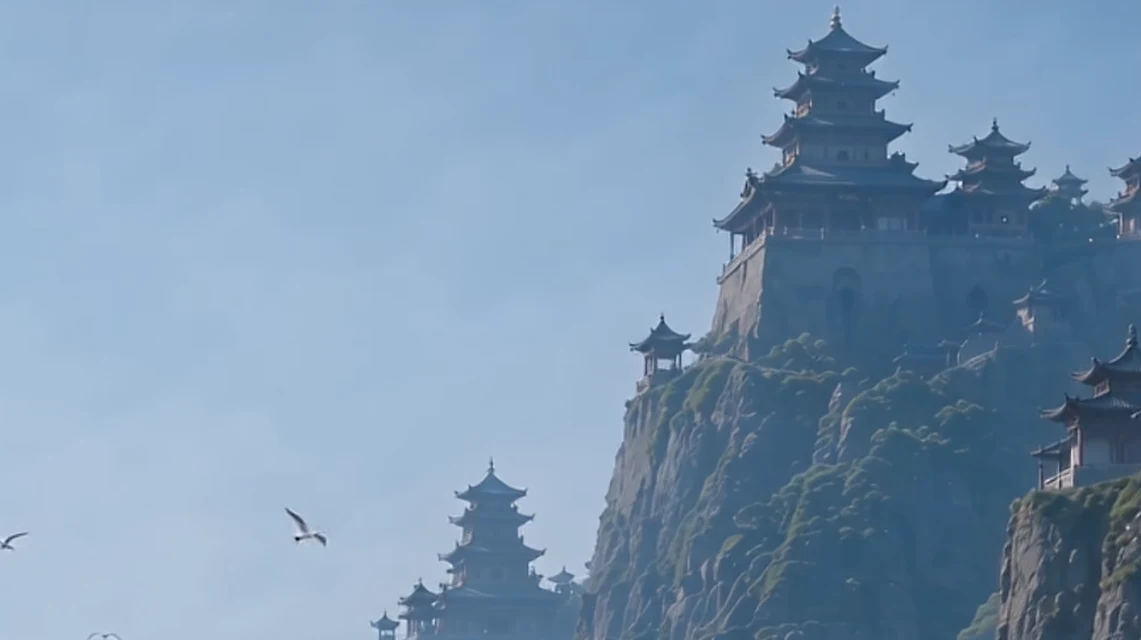

Taoism's basic beliefs start from the Tao, the way all things come into being and return, which words cannot fully name. A handful of working ideas follow from it: de, the power a thing has when it acts in accord with the Tao; wu wei, acting without forcing; ziran, being so of itself; the pairing of yin and yang; and the Three Treasures.
Taoism is both a philosophical tradition, rooted in the Tao Te Ching and the Zhuangzi, and an organised religion with priests, temples and its own scriptures, which traces itself to the second century CE.
Where Taoism comes from
Tradition credits the Tao Te Ching to Laozi, "the Old Master", said to be an older contemporary of Confucius. Scholars now treat the book as a compilation whose author and date are uncertain. The oldest known copies are bamboo slips from a tomb at Guodian, closed around 300 BCE and excavated in 1993, and two silk manuscripts from Mawangdui, buried in 168 BCE and found in 1973.
The second founding text is the Zhuangzi, a book of essays and stories attributed to Zhuang Zhou of the fourth century BCE. Together the two books are the core of what Chinese scholars call 道家 (daojia), the Taoist school of thought.
Taoism as an organised religion, 道教 (daojiao), takes its origin from the Way of the Celestial Masters, a movement founded by Zhang Daoling in the second century CE. Its scriptures were later gathered into the Daoist canon (Daozang); the main edition in use today was compiled in 1445, with a supplement added in 1607. Today's two main orders are Zhengyi, descended from the Celestial Masters, and Quanzhen, founded by Wang Chongyang in the twelfth century.
Core concepts
Each card gives a short definition, the passage it comes from in Legge's 1891 translation, and what the idea looks like in ordinary life. Open "In practice" on any card for the everyday reading.
-
道
Tao (dào), the Way
The source and pattern of everything, which can be followed but not fully described.
"I do not know its name, and I give it the designation of the Tao (the Way or Course)." Chapter 25
In practice
Hold your explanations of the world loosely. The Tao Te Ching opens by warning that any Tao you can put into words is not the constant one (chapter 1).
-
德
De (dé), power or virtue
The power a thing has when it acts according to its nature and the Tao. Legge often renders it "virtue" or, in chapter 51, the Tao's "outflowing operation".
"All things are produced by the Tao, and nourished by its outflowing operation." Chapter 51
In practice
Influence that comes from being good at what you are, rather than from position or force.
-
無為
Wu wei (wúwéi), non-forcing action
Acting without strain or contrivance, so that things get done without being pushed.
"The Tao in its regular course does nothing (for the sake of doing it), and so there is nothing which it does not do." Chapter 37
In practice
Do the necessary thing at the right moment and stop there. Chapter 48 describes the learner adding every day and the follower of the Tao taking away every day.
-
自然
Ziran (zìrán), so of itself
Spontaneity: things being what they are without outside direction. It is the last word of chapter 25.
"Heaven takes its law from the Tao. The law of the Tao is its being what it is." Chapter 25
In practice
Let people and situations show their own shape before you try to change them.
-
陰陽
Yin and yang (yīn yáng)
Paired, complementary forces such as shade and light or yielding and firm. Each contains and turns into the other. Legge translates them as "the Obscurity" and "the Brightness".
"All things leave behind them the Obscurity (out of which they have come), and go forward to embrace the Brightness (into which they have emerged)." Chapter 42
In practice
Expect a quality pushed to its limit to give way to its opposite. Chapter 76 sets the soft and supple on the side of life and the hard and stiff on the side of death.
-
三寶
The Three Treasures (sān bǎo)
The three qualities the speaker of chapter 67 says he holds onto. Common modern renderings are compassion, frugality and humility.
"The first is gentleness; the second is economy; and the third is shrinking from taking precedence of others." Chapter 67
In practice
Chapter 67 adds that gentleness makes one able to be brave and economy makes one able to be generous.
Is Taoism a philosophy or a religion?
It is both, though the split is a later way of sorting the tradition: many practising Taoists read the Tao Te Ching as scripture, and philosophical readers have long drawn on religious commentaries.

| Philosophical Taoism (道家, daojia) | Religious Taoism (道教, daojiao) | |
|---|---|---|
| Core texts | Tao Te Ching, Zhuangzi | The Daoist canon (Daozang), which includes both books and many ritual and meditation texts |
| Origins | Texts of the fourth to third centuries BCE | The Celestial Masters movement, second century CE |
| Aims | Living in accord with the Tao; simplicity, non-forcing | The same, plus health, long life and, in many lineages, transcendence |
| Practice | Reading, reflection, self-cultivation | Ritual, meditation, internal alchemy, festivals, temple life |
| Organisation | None required | Priests, ordination lineages (Zhengyi, Quanzhen), temples and monasteries |
Read the source
The fastest way to understand these ideas is to read the chapters they come from: 1, 11, 16, 25, 37, 42, 48, 51, 67 and 76. The Tao Te Ching best translation guide lets you read any of them with the Chinese and Legge's translation side by side, and the guide to choosing a translation helps you pick a book for the rest.
If you want to try the I Ching, the divination classic that Taoists and Confucians both drew on, the I Ching coin toss tool casts a hexagram and shows Legge's text for it.

Questions about Taoist beliefs
What are the basic beliefs and core concepts of Taoism?
The starting point is the Tao, the way all things arise and return, which words cannot fully name (Tao Te Ching, chapters 1 and 25). Around it sit a few working ideas: de, the power a thing has when it follows the Tao; wu wei, acting without forcing; ziran, being so of itself; the pairing of yin and yang; and the Three Treasures of chapter 67, which Legge translates as gentleness, economy and "shrinking from taking precedence of others".
Is Taoism a philosophy or a religion?
Both, and the two overlap. Chinese scholars use 道家 (daojia) for the school of thought around the Laozi and Zhuangzi, and 道教 (daojiao) for the organised religion with priests, rituals, temples and a canon of scriptures, which traces itself to the Celestial Masters movement of the second century CE. The Stanford Encyclopedia of Philosophy notes that this neat split is a later classification and does not match how the traditions have been practised.
How are Taoist beliefs reflected in the Tao Te Ching?
Most of the core terms come straight from it. Chapter 25 names the Tao and ends with ziran. Chapter 37 states wu wei. Chapter 42 describes all things carrying yin and embracing yang. Chapter 51 pairs Tao and de, and chapter 67 lists the Three Treasures. The concept cards on this page quote each passage in Legge's translation with the chapter number, so you can read it in context.
Sources
- James Legge, trans., The Tâo Teh King (1891), Project Gutenberg eBook #216. All quotations on this page are from this translation.
- Chinese text: 道德經, Project Gutenberg eBook #7337.
- Stanford Encyclopedia of Philosophy, "Daoism", for the daojia and daojiao distinction and the Celestial Masters.
- Stanford Encyclopedia of Philosophy, "Laozi", for authorship, dating and the Mawangdui and Guodian manuscripts.